

bookmate game
en

Levitin Daniel

Daniel J. Levitin is an American-Canadian cognitive neuroscientist and author. He writes nonfiction on music, the brain and critical thinking. He is best known for This Is Your Brain on Music (2006), which spent more than twelve months on the New York Times bestseller list and has sold over 1.5 million copies. His six books have collectively sold more than three million copies worldwide.

Daniel Levitin was born on 27 December 1957 in San Francisco, California, the son of a businessman and a novelist. He grew up in Daly City, Moraga and Palos Verdes. He left Palos Verdes High School after his junior year to attend the Massachusetts Institute of Technology, where he studied applied mathematics. He later enrolled at Berklee College of Music before leaving to work as a record producer and helped found 415 Records in San Francisco.

He returned to education in his thirties, earning a BA from Stanford University in 1992 and an MSc and PhD from the University of Oregon in 1993 and 1996. He completed postdoctoral work at Stanford University Medical School and the University of California, Berkeley.

Levitin is James McGill Professor Emeritus of psychology, behavioural neuroscience and music at McGill University in Montreal. He is also Founding Dean of Arts and Humanities at Minerva University and a Distinguished Faculty Fellow at the Haas School of Business, University of California at Berkeley. He is a fellow of the Royal Society of Canada, the American Association for the Advancement of Science and the Association for Psychological Science.

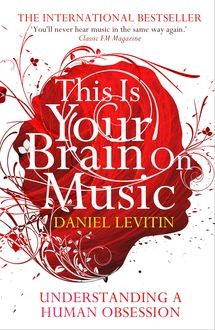
His debut book, This Is Your Brain on Music: The Science of a Human Obsession (Dutton/Penguin, 2006), was a New York Times and Globe and Mail bestseller for over twelve months. It was named one of the best books of the year by The Guardian, The Independent and The Globe and Mail, and was translated into twenty languages.

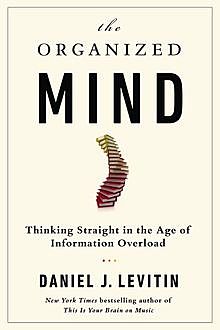
The World in Six Songs: How the Musical Brain Created Human Nature (Dutton/Penguin, 2008) debuted on the New York Times and Canadian bestseller lists. The Organized Mind: Thinking Straight in the Age of Information Overload (Dutton/Penguin Random House, 2014) debuted at number two on the New York Times bestseller list and reached number one in Canada.

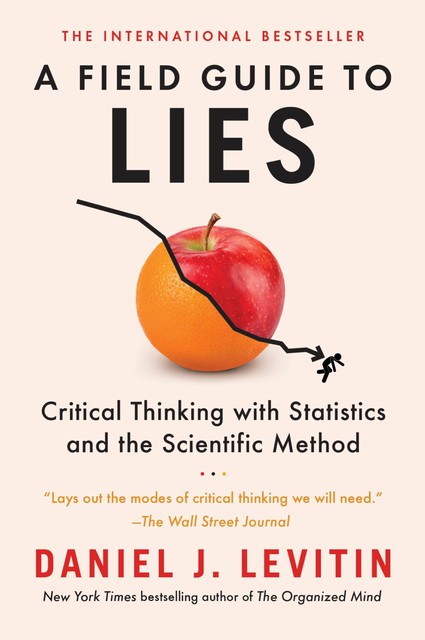
A Field Guide to Lies: Critical Thinking in the Information Age (Dutton/Penguin Random House, 2016), is his most decorated book. It won the National Business Book Award, the Mavis Gallant Prize for Non-Fiction, and the Axiom Business Book Award, and was shortlisted for the Donner Prize.

Successful Aging: A Neuroscientist Explores the Power and Potential of Our Lives (Dutton/Penguin Random House, 2020), debuted at number ten on the New York Times bestseller list and number two in Canada. Published in the United Kingdom as The Changing Mind, it entered the Sunday Times bestseller list at number five and was named one of the best books of 2020 by the same publication.

His sixth book, I Heard There Was a Secret Chord: Music as Medicine (W. W. Norton, 2024) received advance praise from Paul McCartney, Neil deGrasse Tyson, and Bob Weir.

Daniel Levitin has written for The New York Times, The Wall Street Journal, The Washington Post, The New Yorker and The Atlantic. He appears regularly on NPR and CBC, and has co-hosted documentary films for PBS and National Geographic with Bobby McFerrin and Sting.

Photo credit: Bluesky @jacobsilverman
Lebensjahre: 27 Dezember 1957 Gegenwart

Serien

Zitate

Мариhat Zitat gemachtvor 8 Monaten
As an example of the exception fallacy, you may have read that Volvos are among the most reliable automobiles and so you decide to buy one. On your way to the dealership, you pass a Volvo mechanic and find a parking lot full of Volvos in need of repair. If you change your mind about buying a Volvo based on seeing this, you’re using a relatively small number of exceptional cases to form an inference about the entire group. No one was claiming that Volvos never need repair, only that they’re less likely to in the aggregate. (Hence the ubiquitous cautionary note in advertising that “individual performance may vary.”) Note also that you’re being unduly influenced by this in another way: The one place that Volvos needing repair will be is at a Volvo mechanic. Your “base rate” has shifted, and you cannot consider this a random sample.
Мариhat Zitat gemachtvor 8 Monaten
There’s a tendency to think, then, that in the 1800s there just weren’t that many fifty- and sixty-year-olds walking around because people didn’t live that long. But in fact, people did live that long—it’s just that infant and childhood mortality was so high that it skewed the average. If you could make it past twenty, you could live a long life back then. Indeed, in 1850 a fifty-year-old white female could expect to live to be 73.5, and a sixty-year-old could expect to live to be seventy-seven.
Мариhat Zitat gemachtvor 8 Monaten
Post hoc, ergo propter hoc (after this, therefore because of this). This is a logical fallacy that arises from thinking that just because one thing (Y) occurs after another (X), that X caused Y. People typically brush their teeth before going off to work in the morning. But brushing their teeth doesn’t cause them to go to work. In this case, it is even possibly the reverse.

Ersteindruck
Мариhat einen Ersteindruck geteiltvor 7 Monaten
💡Viel gelernt
🎯Lesenswert
👍Lesenswert

  • Nicht verfügbar
    Levitin Daniel
    A Field Guide to Lies
    • 12
    • 10
    • 1
    en
  • fb2epub
    Ziehen Sie Ihre Dateien herüber (nicht mehr als fünf auf einmal)