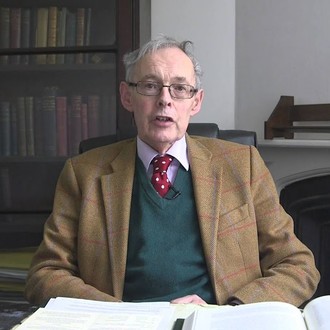
Anthony O'Hear OBE, is a distinguished British philosopher and academic. He is Professor of Philosophy and Head of the Department of Education at the University of Buckingham. His career includes significant roles such as the Honorary Director of the Royal Institute of Philosophy, editor of its journal Philosophy until 2019, and co-founder of the Journal of Applied Philosophy.
Anthony O'Hear was born in Cleethorpes. His tenure as a government special advisor on education spans approximately ten years, notably under Prime Ministers Margaret Thatcher and John Major. As a teacher at Bradford University, his views influenced conservative and social conservative thought significantly.
O'Hear's extensive bibliography showcases his deep engagement with philosophical and educational topics. His works include Karl Popper (1980), What Philosophy Is (1985), The Element of Fire (1989), An Introduction to the Philosophy of Science (1990), Beyond Evolution (1997), After Progress (1999), Introducing Christianity (2000), Philosophy in the New Century (2001), Plato's Children (2006), and The Great Books (2007). He also co-authored Picturing the Apocalypse: The Book of Revelation in the Arts over Two Millennia (2015) with Natasha O’Hear, an exploration of the Book of Revelation through the arts.
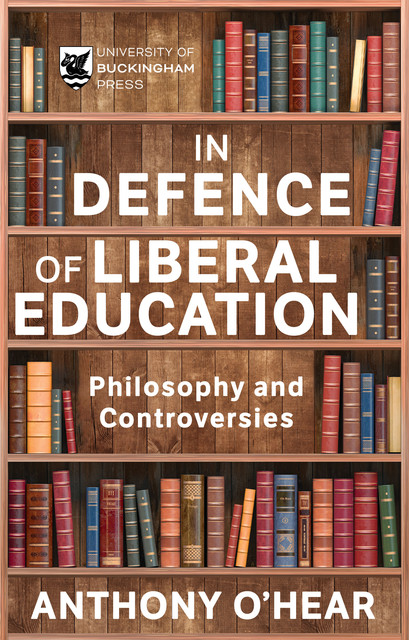
In his recent work, In Defence of Liberal Education (2023), Anthony O'Hear presents a compelling case for traditional liberal education. He contrasts the prevailing progressivist, utilitarian, and politically motivated approaches to education with the principles of liberal education.
Drawing on his experience in educational policy and his work at the University of Buckingham, O'Hear advocates for a classical curriculum. He critiques current educational trends, including the movements to 'decolonize' the curriculum and the involvement of schools in gender and sexuality campaigns.